
On this page
- What storms hit this area?
- What should you check before storm season?
- What should you do after a storm?
- How do you avoid storm chasers?
- When is storm damage a repair, and when a replacement?
- What does a derecho do to gutters?
- What about tropical storms?
- How do you keep a record for insurance?
- What tree work helps most?
- What should be in a simple storm kit for the house?
- Where should you go next?
What storms hit this area?
| Event | Why it matters for gutters |
|---|---|
| Summer thunderstorms | Very frequent; short, heavy rain tests gutter size |
| Derecho, June 2012 | Gusts over 70 mph; about 1 million Virginia customers lost power; every Virginia death from falling trees |
| Hurricane Isabel, 2003 | Costliest disaster in Virginia history |
| Tropical Storm Lee, 2011 | Downed trees and flood damage in Fairfax County |
| March 2018 windstorm | Widespread outages and downed trees |
| July 2019 flash flooding | About $14.8 million in damage in Fairfax County |
Fairfax County also notes that 2018 was the wettest year on record for the Washington area.
What should you check before storm season?
- Clean gutters and downspouts so they can carry heavy rain.
- Check downspouts are strapped and connected.
- Extend downspouts away from the foundation.
- Look for sagging or loose runs and get them fixed.
- Trim dead or overhanging limbs. Falling trees are the main storm threat here.
- Take photos of the gutters and roof edge in good condition, for insurance.
What should you do after a storm?
- Stay safe. Keep away from downed lines; call 911 if one is down.
- Photograph damage from the ground before anything is moved.
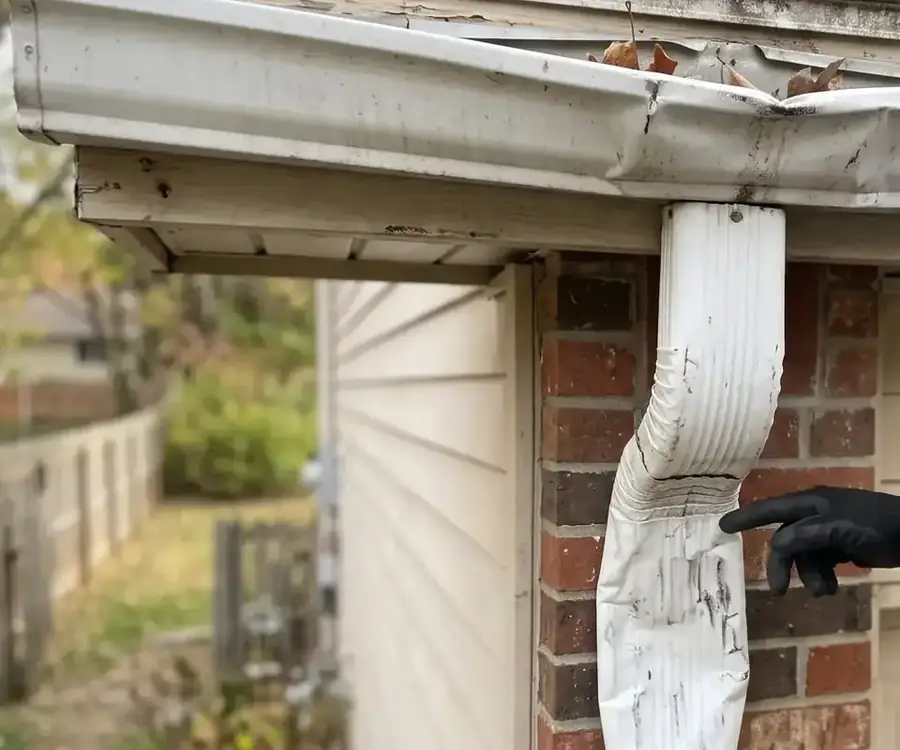
- Keep people away from hanging gutters.
- Report major damage to your insurer.
- Call for an inspection of gutters, fascia and roof edge.
How do you avoid storm chasers?
After big storms, crews sometimes go door to door. Virginia's contractor board warns that a state license, not just a local business license, is required for most work over $1,000. It advises a detailed written contract and never paying in full up front, and warns about high-pressure "today only" offers, "leftover material" pitches and prices that rise once work starts. Check any license on DPOR's License Lookup.
When is storm damage a repair, and when a replacement?
If one section is bent and the rest is sound, repair it. If the system is old and much of it is damaged, replacement may be better value, especially if insurance is paying. See storm damage and repair or replace.
What does a derecho do to gutters?
A derecho brings straight-line winds across a wide area in a few hours. The June 2012 derecho produced widespread gusts above 70 mph and reached as high as 87 mph in the Baltimore-Washington area. For gutters, wind itself is less of a danger than what it brings down: limbs on the roof edge, whole trees across houses, and debris clogging every downspout. After a storm like that, check gutters even if nothing seems to have hit the house.
What about tropical storms?
Remnants of hurricanes and tropical storms reach Northern Virginia mostly as heavy rain and gusty wind. Hurricane Isabel in 2003 was the costliest disaster in Virginia history, and Fairfax County records flood damage to more than 2,000 homes. Tropical Storm Lee in 2011 brought flood damage too. Gutters cannot stop flooding, but clean gutters and well-placed downspouts keep roof water from adding to it at the foundation.
How do you keep a record for insurance?
- Take dated photos of each side of the house once a year.
- Keep receipts for gutter work, cleaning and tree trimming.
- After a storm, photograph damage before cleaning up.
- Note the date and time of the storm.
What tree work helps most?
Have an arborist look at large trees within falling distance of the house, especially any with dead limbs, splits or lean. Removing dead wood and limbs that overhang the roof cuts both debris and storm risk. In the City of Falls Church and Fairfax County, check local rules before removing a large tree.
What should be in a simple storm kit for the house?
- Photos of the house in good condition, updated yearly.
- The insurer's claim number and policy details.
- The number of a gutter contractor and a tree service.
- A tarp for temporary roof edge protection, put up only if safe.
After big storms, contractors get busy fast. Having numbers and photos ready saves time. Check any contractor's license on DPOR's License Lookup before signing.
A quick walk around the house after every big storm, looking up at the gutters and down at where each downspout empties, catches most problems early.
Where should you go next?
Read storm damage for repairs, and Falls Church trees and your gutters for tree care.
Make the walk-around part of the routine after every major storm warning.