
On this page
- Where does copper suit the house?
- What does copper cost?
- How is copper installed?
- How does copper age?
- Is copper the right choice?
- What parts make up a copper system?
- Who installs copper?
- Does copper make sense with the local climate?
- Can copper be mixed with other materials?
- How should copper be maintained?
- Can copper be used with other materials on the house?
Where does copper suit the house?
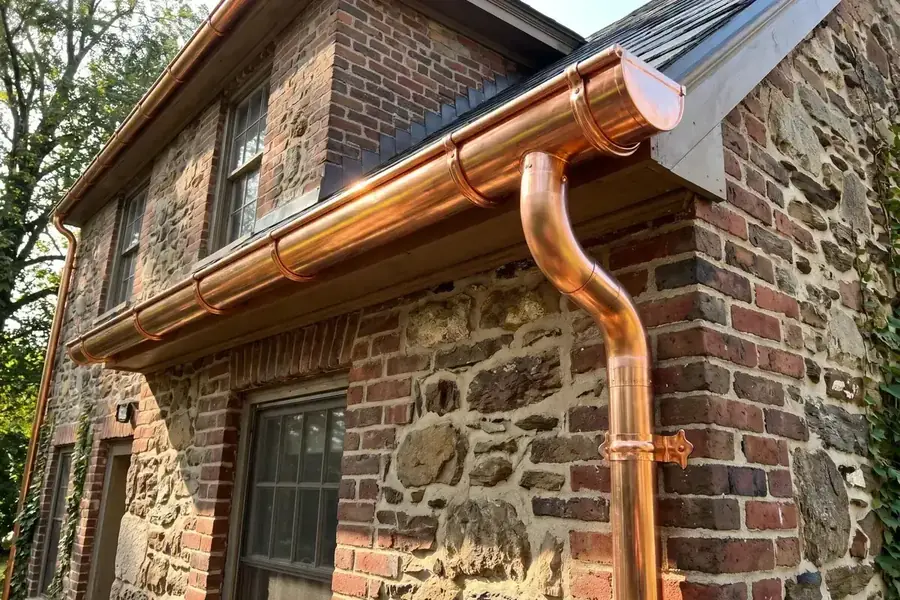
Copper belongs on houses where the gutters are part of the look:
- Older and historic homes. The Falls Church area has a long history, from a parish founded in 1734 to the Cherry Hill Farmhouse of 1845. Nearby, Alexandria's Old Town became the third historic district in the country in 1946. On houses like these, copper half-round looks right.
- Custom homes. Large new homes in places like McLean sometimes use copper as a finishing detail.
- Stone and brick facades. Copper's patina sits well against masonry.
If the house is in a historic district, check whether exterior changes need review before choosing materials.
What does copper cost?
National guides put copper at roughly $25 to $40 a foot installed, against roughly $9 to $13 a foot for seamless aluminum. Soldered joints, round downspouts, decorative hangers and conductor heads add more. It is a premium choice.
How is copper installed?
- Joints soldered, not just sealed, so they last as long as the metal.
- Copper or compatible hangers and fasteners to avoid corrosion.
- No contact with aluminum or galvanized steel.
- Expansion allowance on long runs, since copper moves with temperature.
- Careful handling, because scratches and fingerprints show until the patina forms.
How does copper age?
| Stage | Look |
|---|---|
| New | Bright, shiny copper |
| Months to a few years | Darkens to brown |
| Many years | Can develop a green-blue patina |
Some owners like the brown stage and have the copper treated to slow further change. Others let it go green.
Is copper the right choice?
If you plan to stay a long time, the house suits it and the budget allows, copper is a lasting choice. If not, aluminum in a dark bronze or a half-round aluminum gives a similar look for far less. See aluminum vs steel vs copper.
What parts make up a copper system?
A copper gutter job often includes more than the trough:
| Part | Purpose |
|---|---|
| Half-round or K-style gutter | Carries the water |
| Round or square downspouts | Usually round with half-round |
| Brackets or hangers | Exposed brackets are part of the look |
| Soldered end caps and outlets | Long-lasting joints |
| Conductor heads | Decorative boxes at the top of downspouts |
| Elbows and straps | Matched copper parts |
Each of these adds cost, which is why copper quotes vary widely.
Who installs copper?
Copper needs soldering, careful handling and an eye for detail. Not every gutter contractor does it. Ask to see photos of past copper work and how they handle joints, expansion and contact with other metals. Virginia requires a state contractor's license for jobs of $1,000 or more, and any copper job will be well over that.
Does copper make sense with the local climate?
Copper handles freeze-thaw and snow well because its joints are soldered rather than sealed. The area averages about 64 freezing nights and 13.7 inches of snow a year, and sealant joints on aluminum or steel gutters are where most winter leaks start. Copper's bigger risk here is theft or damage from falling limbs on wooded lots.
Can copper be mixed with other materials?
Copper should not touch aluminum or galvanized steel, which corrode when in contact with it. If the roof has copper flashing, the gutters should be copper too, or separated. Water running off copper can also stain stone and light-colored siding green over time, so plan downspout placement with that in mind.
How should copper be maintained?
- Keep it clean of leaves so it drains and dries.
- Check soldered joints occasionally, especially after hard winters.
- Do not paint or seal it unless you want to stop the patina.
- Use copper or compatible fasteners for any repair.
For most homes, seamless aluminum remains the practical choice. Copper is for homes where its look and lifespan justify the price.
Can copper be used with other materials on the house?
Yes, with care. Copper works well with slate, wood, stone and most shingles. Keep it away from aluminum flashing, aluminum siding trim and galvanized steel, which corrode when copper runoff or contact reaches them. If part of the house keeps aluminum gutters, separate the two systems so water from copper does not run onto aluminum. A contractor experienced with copper will plan this before starting.
See half-round gutters for the traditional profile, and aluminum vs steel vs copper for a full comparison.
Ask for references or photos of copper jobs a few years old, so you can see how the work and the patina have held up.